
10 min read
Your Identity Is a Seed
A CardanoWall identity is one 32-byte Identity Seed. Save that seed and you can restore your signing and receive keys in any Label 309 tool; lose it and you lose future use of that identity.
SecurityGuides
10 min read
A CardanoWall identity is one 32-byte Identity Seed. Save that seed and you can restore your signing and receive keys in any Label 309 tool; lose it and you lose future use of that identity.
SecurityGuides

10 min read
A receive address is the public address someone uses to send you a sealed Label 309 record. It is safe to share — unlike your private Identity Seed, which it can never reveal.
GuidesSecurity

10 min read
Share a receive address. Your client scans the public Label 309 feed and locally decrypts the records your keys can open — no server-side mailbox, no recipient list on chain.
GuidesSecurity
10 min read
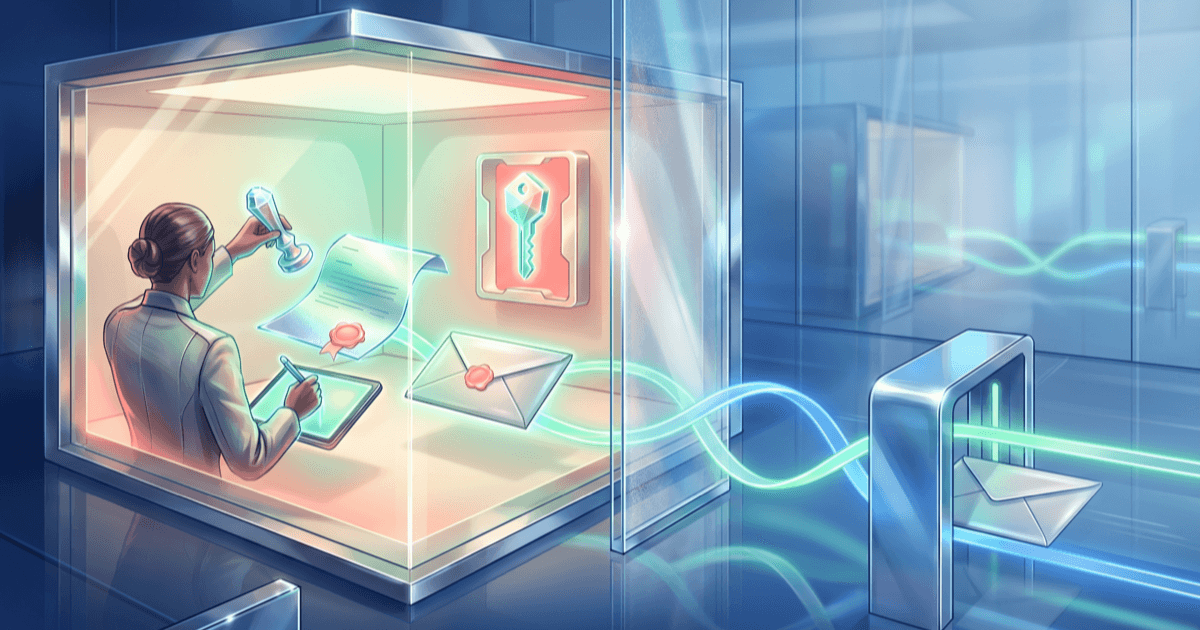
In CardanoWall, signing, sealing, and decryption all happen locally — the gateway publishes proofs and stores ciphertext but is designed never to receive your private keys.
Security

9 min read
CardanoWall stores your identity as encrypted vault ciphertext, never plaintext seeds. Here is exactly what the server holds, what only your passkey can open, and why your seed is the real backup.
Security

8 min read
A passkey does not become your CardanoWall identity — it unlocks an encrypted vault that only your authenticators can open. Here is how WebAuthn PRF makes daily access easy without making CardanoWall a seed custodian.
Security

7 min read
Yes, you still need to save your Identity Seed even with a passkey. The passkey is a convenience unlock; the seed is the portable identity that works across CardanoWall, the CLI, SDKs, and any Label 309 tool.
SecurityGuides

8 min read
In the browser, CardanoWall keeps unlocked keys in session memory and writes only encrypted vault ciphertext to IndexedDB — never plaintext Identity Seeds or private keys.
Security

7 min read
Removing a passkey re-encrypts your current CardanoWall identity vault to the remaining factors and hard-deletes the old ciphertext — real revocation going forward, but it cannot undo access that already happened.
Security

8 min read
CardanoWall sees account, billing, and public proof data. By design it does not see your plaintext Identity Seed, your private keys, or the plaintext of a sealed file.
Security

7 min read
A team can share a CardanoWall identity by sharing its Identity Seed — but that hands every holder full signing and decryption power, with no partial or per-person revocation.
GuidesSecurity

8 min read
Deactivating or deleting a CardanoWall identity changes how your account uses it, but it never changes the cryptographic validity of records already published on Cardano.
GuidesSecurity